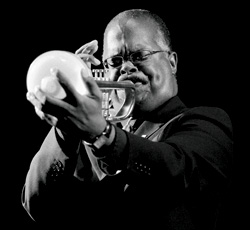
FSU jazz great Scotty Barnhart pens definitive history of jazz trumpet
D. Donovan, Editor/Sr. Reviewer "California Bookwatch" (California, USA)
just finished reading "The World of Jazz Trumpet: A Comprehensive History & Practical Philosophy," by Scotty Barnhart. The book includes the history of jazz trumpet, interviews with several jazz trumpeters (Freddie Hubbard, Clark Terry, Wynton Marsalis, and more!), and suggestions for jazz trumpet performance, practice, and technique. I thoroughly enjoyed the book and would consider it a must-read for all aspiring jazz trumpeters. Heck, I'd even recommend it to non-trumpeters - it's about time you guys learn a thing or two about the most important instrument in the history of jazz!
While there are many books about jazz history, "The World of Jazz Trumpet" stands on its own thanks to the unique insight and experiences of the book's author, Scotty Barnhart, who also happens to be a professional jazz trumpeter and highly-esteemed educator. As a trumpet player, Barnhart knows precisely how difficult it is to play solos from the likes of Louis Armstrong, Dizzy Gillespie, and Miles Davis. He knows these founding fathers of jazz were enormously talented and treats them with the respect and reverence that they deserve. Barnhart doesn't just want us to learn their history; he also wants us to appreciate these musicians and their music as much as he does.
Since this book focuses on jazz trumpet, Barnhart delves deeper into the lineage of trumpet players than do most jazz books. For instance, most jazz history books don't talk about ANY professional female jazz trumpeters. Barnhart, however, devotes an entire chapter to them, and mentions several that I hadn't even heard of before. Once such artist is Clora Bryant and her album "Gal With A Horn". As I type this, I'm listening to her solo on "Tea For Two". Damn! If I didn't know any better, I'd think this was Dizzy Gillespie soloing. Thanks to Barnhart, there are quite a few other musicians and albums I'm going to be checking out over the next few weeks. I feel like a whole new jazz world has been revealed!
After the history and interview sections, Barnhart devotes a few chapters to trumpet playing. Topics cover everything from playing in a big band (Barnhart is a featured soloist in the Count Basie Orchestra) to how to play with a plunger. Each section is informative and valuable to any aspiring jazz trumpet player. Once again, Barnhart's own experiences as a trumpet player and educator add value to the content. He knows his stuff!
As should be clear by now, I really enjoyed this book and especially Scotty Barnhart's stories and writing style. I thank him for sharing this with all of us and I encourage you to read it.Reviewer: Pam Laws, retired Professor of Jazz History, Tallahassee Community College, Tallahassee, Florida.
It may that one day the History of Jazz will be documented as that which was written before Ken Burns’ Jazz and after that series ended. What can not be argued, however, is that academe has not always embraced this history in spite of its essential place in understanding what the United States and its people have been and are becoming. Understanding people has, perhaps, been its greatest lack, for it has simply been easier to subjugate the people who created this music for the purposes of personal politics, introspective psychological grind, or intellectualizing those people out of existence into a safe place where they could be tolerated beyond their apparent gifts. Nevertheless, when cultural critics have challenged the United States to be more than a vertiginous interpretation of European culture, or when the social blinders didn’t work so that injustices within the U.S. made its democratic principles abroad seem hypocritical, the U.S. turned to Jazz and its musicians to defend against charges that there was nothing authentic about U.S. culture or that its citizens were mere capitalistic pawns. And as though Gabriel himself could defend these ideals, the United States has often turned to its jazz trumpeters to proclaim its greatness and its innocence. The list is a long once that includes Louis Armstrong, Lester Bowie, Wynton Marsalis, and, of course, Scotty Barnhart.
Barnhart has proven to be not only an inescapably gifted trumpeter but a goodwill ambassador for the music as well as the author of one of its definitive histories. Subjective historians should be squirming a little bit after they ready this history of the jazz trumpet, for its main ingredients are the essence of the music: innocence and joy in the face of too much imposed cynicism and generosity in the face of too much self absorption. But that’s who Scotty Barnhart is as a jazz artist and as a man. How quickly historians have rushed to note that Louis Armstrong and others have shown a face of joy when so much around them was anything but joyful; nevertheless, the interpretation of that joy was often in the hands of those who didn’t ask Armstrong. Perhaps that is why so many were shocked when Pops took a stand about Little Rock and kept right on smiling when critics and danger loomed. What kind of Joy is this? How could he keep smiling in the path of harm? Why didn’t they just ask him? The joy of Scotty Barnhart’s book is that he welcomes the questions and even generously answers them before they are asked. He has written a book because he wants others to share the information, and he is generously with what he has discovered.
Scotty Barnhart plays the trumpet, knows the music, composes, listens to others, and is abundantly joyful in his life as a jazz trumpeter. Without any apologia, he presents one of the most detailed accounts of jazz trumpeting even as he communicates it with the tone of an artist who is still exuberant about what he does. Perhaps that is what, initially, catches the reader off guard. Barnhart tells the truth without grinding the proverbial ax. He reveals and explains without pretense, and he teaches without condescension. If it is true that the best teachers are those who do what they teach and inspire others, then Barnhart is a master teacher in The World of Jazz Trumpet. And in an arena of jazz history writings that have sometimes sacrificed the very gut revelations of truth in order to intellectualize them beyond even the comprehension of those who lived injustices or who died without being hailed as artists, this book is more than fresh air; it is need, met and satisfied.
Four features of this book stand out: First, Barnhart goes out of his way to reveal trumpet artists who have either been forgotten altogether or who are not usually included in the jazz history-as-usual assembly line textbooks. Next, in a field that has been accused of harboring misogynistic attitudes and practices, Barnhart includes an entire chapter of women jazz trumpeters as though it is the most natural thing in the world to do. (Perhaps Abraham Maslow’s theory of self actualization is an appropriate description of Barnhart here, for only a man who is secure within himself and only an artist who is secure with his artistry does not feel threatened by others musicians, even women.) then, Barnhart, allows the musicians to speak for themselves. The transcribed interviews create even more integrity about this book if that is possible. I can’t help but wonder if Barnhart’s book includes this last feature because he, himself, has been subjected to so much interpretation and explanation of his being and his artistry by those who wouldn’t take the time to ask him who he is, what he does, and why. Finally, Barnhart includes and features vocalists as he exposes the jazz conversation. It isn’t that other authors haven’t discussed the jazz singer and profiled the greats; it is that Barnhart integrates them and admits that he studies singers. Shall we talk about courage here? Shall we even think that in a text about jazz trumpet, the voice is heralded as essential study and not just a footnote on the tragic life of Billie Holiday?
I think that people who love life and who love Jazz need this book. The balance of humanity and exposition are obvious, but it is Scotty Barnhart’s joy and generosity in sharing, not just presenting, what he loves that distinguishes The World of Jazz Trumpet. Apparently, it’s okay to be a jazz artist, an intellect, a man, an African American who knows about injustices, and still be happy. Perhaps it is these very ingredients that will keep Jazz alive long after this generation’s jazz artists join their brothers and sisters in jazz heaven.